

Cloud Computing

Cloud Computing with Triton Networks
Triton has partnered with world-class data centers to bring customers a range of cloud computing solutions to dramatically improve the efficiency and availability of IT resources. You can rapidly deploy new applications without capital investment and reshape your environment on demand.
Triton offers several different versions of cloud computing, ranging from public and private cloud options to hybrid cloud options. Cloud services scale with one call, eliminating the hassle often associated with planning for future growth and capacity. Each program provides the level of security required to protect infrastructure and data from unauthorized access.
Benefits of Cloud Computing:
- Cloud computing is more cost effective
- Lightning fast performance
- Always-on availability
- Instantly scalable resources
- Flexible capacity
- Strategic competitive advantage
- Improved collaboration
- Improved mobility
- Increased security
- Less environmental impact
Before you select a cloud computing option, it’s very important to evaluate your existing environment.
Triton helps businesses and organizations leverage critical changes in telecommunication technology to
increase productivity, reduce operating costs, and protect the bottom line.
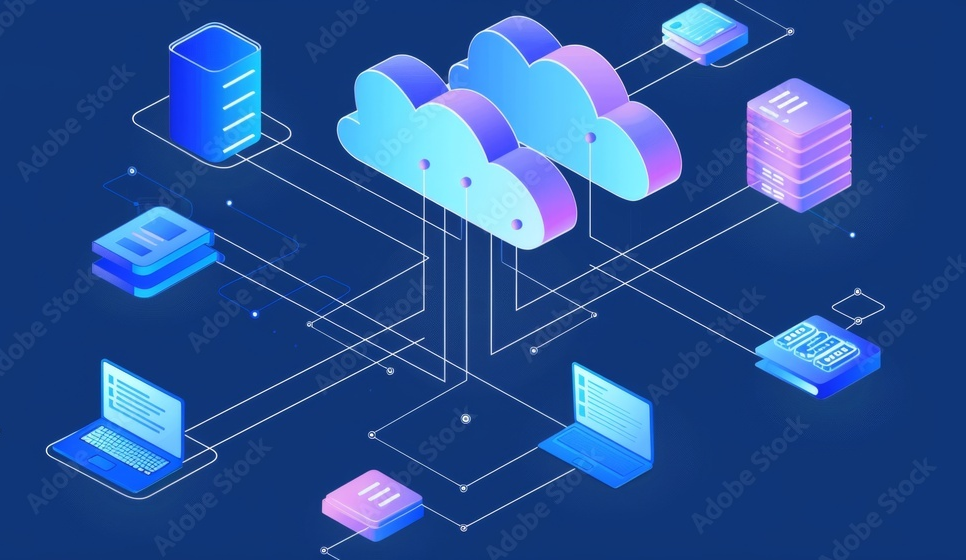
What is Cloud Computing?
Cloud computing has three main cloud service models: IaaS (infrastructure as a service),
PaaS (platform as a service), and SaaS (software as a service). You might also hear IaaS,
PaaS, and SaaS called cloud service offerings or cloud computing categories, but all of these
terms refer to how you use the cloud in your organization and the degree of management you’re
responsible for in your cloud environments.
Understanding the types of cloud computing resources can be time-consuming and costly.
Enterprises need to buy physical servers and other infrastructure through procurement
processes that can take months and support the architecture of cloud computing. The acquired
systems require physical space, typically a specialized room with sufficient power and cooling.
After configuring and deploying the systems, enterprises need expert personnel to manage them.
Cloud computing addresses these issues by offering computing resources as scalable, on-demand services.
What are the types of cloud computing services?
There are three main types of cloud computing service models that you can select based on the
level of control, flexibility, and management of your business needs:
Infrastructure as a service (IaaS)
Infrastructure as a service (IaaS) offers on-demand access to IT infrastructure services,
including compute, storage, networking, and virtualization. It provides the highest level
of control over your IT resources and most closely resembles traditional on-premises IT resources.
Platform as a service (PaaS)
Platform as a service (PaaS) offers all the hardware and software resources needed for cloud
application development. With PaaS, companies can focus fully on application development
without the burden of managing and maintaining the underlying infrastructure.
Software as a service (SaaS)
Software as a service (SaaS) delivers a full application stack as a service, from underlying
infrastructure to maintenance and updates to the app software itself. A SaaS solution is often
an end-user application, where both the service and the infrastructure is managed and maintained
by the cloud service provider.
What are the benefits of cloud computing?
It’s flexible
Due to the architecture of cloud computing, enterprises and their users can access cloud services
from anywhere with an internet connection, scaling services up or down as needed.
It’s efficient
Enterprises can develop new applications and rapidly get them into production—without worrying
about the underlying infrastructure.
It offers strategic value
Because cloud providers stay on top of the latest innovations and offer them as services to
customers, enterprises can get more competitive advantages—and a higher return on investment—
than if they’d invested in soon-to-be obsolete technologies.
It’s secure
Enterprises often ask, what are the security risks of cloud computing? They are considered
relatively low. Cloud computing security is generally recognized as stronger than that in
enterprise data centers, because of the depth and breadth of the security mechanisms cloud
providers put into place. Plus, cloud providers’ security teams are known as top experts in the field.
It’s cost-effective
Whatever cloud computing service model is used, enterprises only pay for the computing resources
they use. They don’t need to overbuild data center capacity to handle unexpected spikes in demand
or business growth, and they can deploy IT staff to work on more strategic initiatives.
Let a Triton professional help you determine which cloud computing solution best serves your
businesses needs in terms of security, scalability, and flexibility.